

Few roles in the construction industry carry as much day-to-day responsibility and professional challenge as site manager jobs. The site manager is the central figure on any construction project — the person who translates the design team's intentions and the contractor's programme into the physical reality of a completed building. They coordinate subcontractors, manage labour and materials, enforce health and safety requirements, maintain quality standards, and report progress to senior management and clients. Without a capable site manager, even the best-resourced project will struggle.
Authority on a construction site flows directly through the site manager. Their decisions affect every person working on site, every trade package, and every aspect of programme and quality performance. This guide covers what the role involves, the qualifications required, how salaries reflect seniority, and the career path that leads to and beyond site management.
Site managers are responsible for the day-to-day running of construction operations. Key duties include planning and coordinating site activities and subcontractor packages, chairing site progress and coordination meetings, managing site logistics (deliveries, plant, temporary works), enforcing health and safety policies, conducting regular site inspections, managing the site diary and progress records, communicating with the client's representatives and design team, and troubleshooting technical and programme issues as they arise.
Site managers work closely with quality control professionals to ensure that work is completed to specification and that defects are captured and resolved promptly. They are also the primary enforcement point for health and safety compliance on site and must maintain a working knowledge of CDM 2015 regulations, permit-to-work systems, and risk assessment processes.
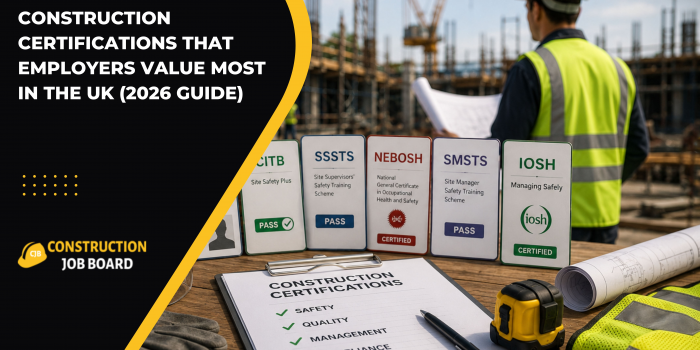
The SMSTS (Site Management Safety Training Scheme) is a mandatory qualification for UK site managers on most commercial projects — a five-day course that covers health, safety, and environmental legislation relevant to site management. The CSCS Black Manager Card is the standard CSCS credential for site managers and requires a Level 6 or 7 NVQ or degree in construction management, along with the SMSTS.
First Aid at Work certification is universally expected. Many employers also require or prefer membership of a professional body — the Chartered Institute of Building (CIOB) offers MCIOB status, which is highly respected throughout the industry. A degree or HNC/HND in Construction Management, Civil Engineering, or a related discipline provides the academic foundation for career progression beyond site management level.
Site managers in the UK typically earn £45,000 to £65,000 per year on a permanent basis. Senior site managers and site managers on major projects earn £65,000 to £80,000. Project Managers, the natural progression from site management, earn £70,000 to £100,000. Contract site managers are in consistent demand and earn £300 to £500 per day depending on project type, size, and required experience. Civils and infrastructure site managers, rail, and nuclear command premiums over commercial building rates.
Most site managers reach the role through one of two routes: a trade background (starting as a skilled tradesperson or labourer and progressing through foreman and supervisor roles) or an academic/formal route (HNC/HND or degree in construction management followed by assistant site manager and site manager roles). Both pathways are equally respected by the industry, though the trade route typically takes longer. The CIOB's Learning Framework supports professionals from both backgrounds in achieving MCIOB status.